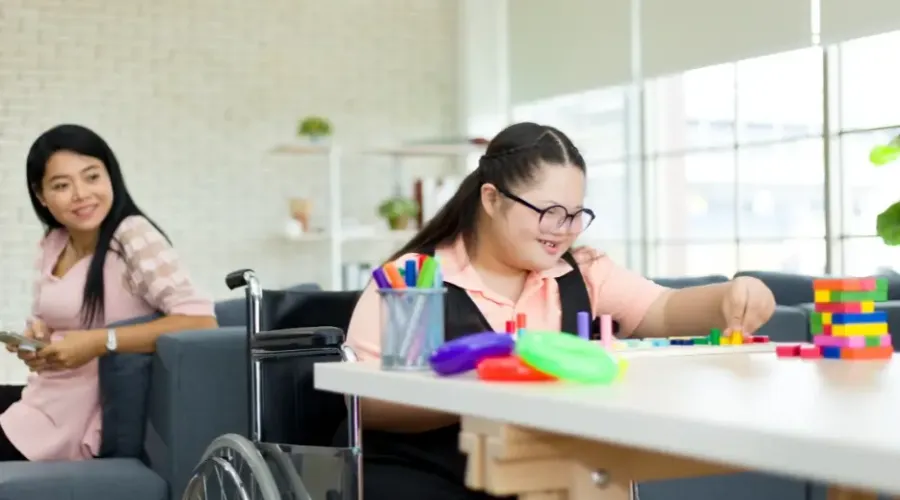
Independence means different things to different people. For some, it is managing morning routines without assistance. For others, it is cooking a meal, catching public transport, or simply having the confidence to make everyday decisions on their own terms.
Daily living support through the NDIS is designed to help participants work towards whatever independence looks like for them. But the quality of that support, and how it is delivered, makes all the difference.
What is daily living support?
Daily living support, formally known as Assistance with Daily Life under the NDIS, covers the practical help participants need to manage everyday tasks. This can include:
- Personal care such as showering, dressing, grooming, and hygiene
- Meal preparation including planning, shopping, cooking, and kitchen safety
- Household tasks like cleaning, laundry, and home organisation
- Medication management with reminders and assistance as needed
- Morning and evening routines to start and end the day comfortably
These are not just tasks to be completed. Each one is an opportunity to build skills, confidence, and autonomy.
The difference between doing for and doing with
The most important distinction in quality daily living support is the approach. There are two fundamentally different ways to deliver it:
Doing for means the support worker completes the task while the participant watches or is elsewhere. The task gets done, but the participant does not develop skills or confidence.
Doing with means the support worker and participant work together. The worker provides guidance, prompts, and hands-on help where needed, but actively encourages the participant to do as much as they can independently. Over time, the level of assistance gradually reduces.
The goal should always be to increase what the participant can do independently, not to create dependence on the support worker.
How daily living support builds independence
When delivered with a skill-building mindset, daily living support creates measurable progress over time.
Routine and structure
Consistent routines reduce anxiety and build muscle memory. When a participant follows the same morning routine each day with gentle support, the steps eventually become automatic. The support worker’s role shifts from directing to simply being present as a safety net.
Confidence through repetition
Every time a participant successfully completes a task, even with assistance, their confidence grows. A participant who initially needed full support to prepare a simple meal might, after several months, only need someone nearby while they cook independently.
Adaptive strategies
Good support workers identify creative solutions tailored to each participant. This might include:
- Visual checklists for multi-step tasks
- Adapted kitchen tools for easier meal preparation
- Timer-based reminders for medication
- Breaking complex tasks into smaller, manageable steps
These strategies empower participants to manage tasks even when support is not present.
Goal tracking
Progress is easier to maintain when it is measured. Regular check-ins between the participant, their family (where appropriate), and the support team help track what is improving, what needs adjusting, and what new goals to work towards.
What good daily living support looks like
Quality daily living support has a few consistent characteristics:
- Participant-led. The participant’s preferences and pace always come first. Support workers adapt to them, not the other way around.
- Consistent workers. Familiarity matters. Having the same support worker builds trust and allows the worker to understand the participant’s strengths, triggers, and communication style.
- Respectful of dignity. Personal care in particular requires sensitivity, professionalism, and respect for privacy. A good provider trains their workers specifically in dignity of care.
- Flexible scheduling. Needs change week to week. A provider should accommodate schedule adjustments without excessive notice periods or rigid rules.
- Connected to goals. Every support session should, in some way, connect back to the participant’s broader NDIS goals. Even routine tasks can be framed as skill-building opportunities.
Common daily living goals in NDIS plans
If you are preparing for a plan review or thinking about how daily living support fits into your goals, here are examples of how participants frame their goals:
- “I want to be able to prepare my own breakfast independently.”
- “I want to manage my personal care routine with minimal support.”
- “I want to learn to do my own laundry and keep my home tidy.”
- “I want to develop a consistent morning routine that helps me get to my activities on time.”
The more specific your goals, the easier it is for your provider to design support that targets real outcomes.
Getting started
If you or a family member could benefit from daily living support, the first step is a conversation. We will take the time to understand your current situation, your goals, and what kind of support would make the biggest difference.
There is no pressure and no obligation. Just a genuine conversation about how we can help.
Contact us to arrange a free consultation.